
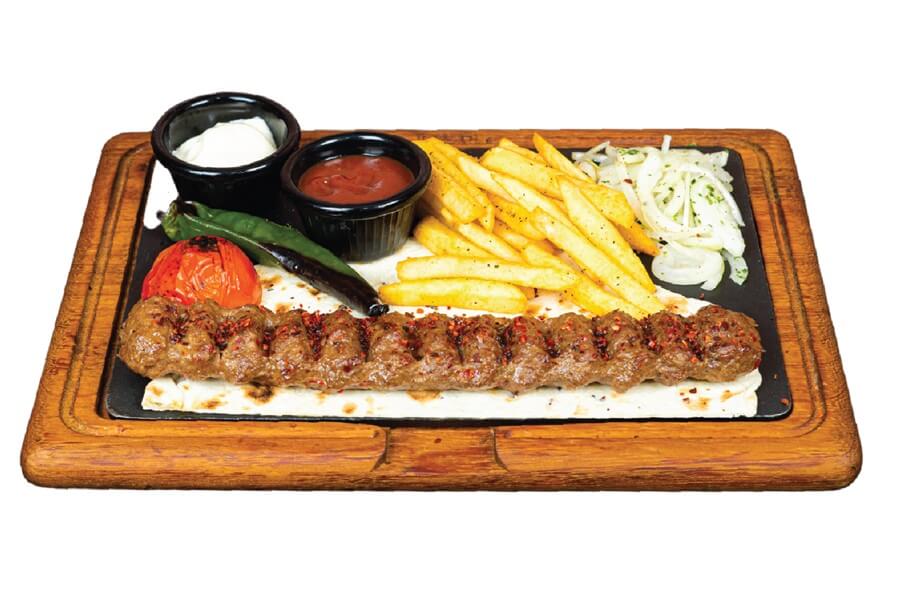
What is Adana kebab? It is a classic Turkish kebab of hand-minced lamb, red pepper and warm spices. First, a cook presses the meat onto a wide, flat skewer. Then they grill it slowly over glowing charcoal. The dish takes its name from the city of Adana in southern Turkey. Naturally, it carries a smoky aroma and a gentle, warming heat. Today, it ranks among the best-loved kebabs in Turkish cuisine.
In this guide, we explain where the dish comes from and what goes into it. We also cover how it tastes and how it differs from other kebabs. Finally, we show you where to enjoy an authentic, halal version in Kuala Lumpur.
The origin of Adana kebab
This kebab takes its name from Adana, a city in southern Turkey near the Mediterranean coast. Cooks there love bold, spice-forward flavours. In fact, the dish grew so popular that Turkey now protects its name and recipe. Today, kebab houses across the country and around the world grill it. Still, its fiery character truly belongs to Adana.
What is Adana kebab made of?
So what goes into a traditional Adana kebab? It relies on just a few good ingredients:
- Lamb: hand-minced or coarsely minced lamb, which gives the kebab its texture.
- Red pepper: Turkish red pepper flakes (pul biber) for colour and a warm, mild heat.
- Spices and herbs: a blend of Turkish seasonings that lift the flavour of the meat.
- The skewer: a cook presses the meat by hand onto a flat skewer, then grills it over charcoal.
Together, these simple parts create a smoky, savoury taste. Above all, the charcoal grill makes the real difference.
What does it taste like?
It tastes smoky, juicy and gently spicy. The charcoal chars the outside and keeps the inside tender. Meanwhile, the red pepper adds a heat that builds slowly. The richness of the lamb then balances that warmth. So if you love grilled meat with character, you will enjoy every bite.
Adana kebab vs Urfa kebab: what’s the difference?
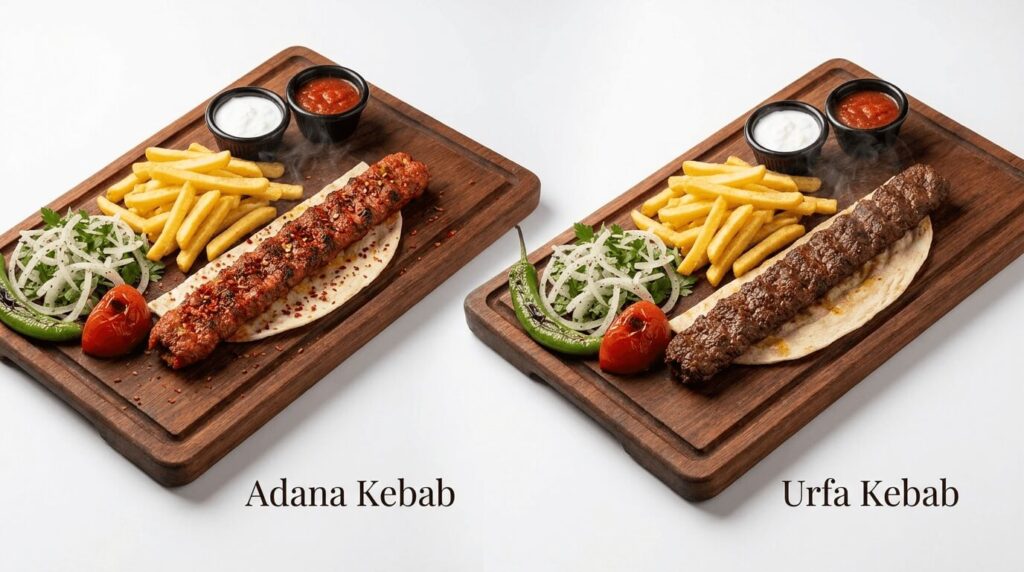
People often compare Adana kebab with its close cousin, Urfa kebab. Cooks prepare the two in almost the same way. However, the heat sets them apart. Adana brings the spice with red pepper flakes, while Urfa stays mild. Therefore, if you want a little warmth, choose Adana.
How it is served
Servers bring Adana kebab straight off the grill. Usually, it arrives with flatbread, grilled tomatoes and peppers, and onions with sumac. At Lalezar, we marinate our lamb with Turkish herbs and spices. Then we serve it with french fries and grilled vegetables. As a result, you get a hearty, satisfying plate.
Is Adana kebab halal?
Can Adana kebab be halal? Absolutely, because it depends on the lamb and the kitchen. At a halal Turkish restaurant, the team sources and prepares the meat to halal standards. Of course, Muslim diners can then order with full confidence. At Lalezar, we prepare every dish halal.
Where to try authentic Adana kebab in Kuala Lumpur
Has this made you hungry? Then come and taste our charcoal-grilled kebabs at Lalezar, a halal Turkish, Mediterranean and Persian restaurant in Kuala Lumpur. Alongside our Adana kebab, you will also find koobideh, barg, and fragrant rice dishes. So explore the full Lalezar menu, or find your nearest branch. We welcome you across three locations: Ampang, USJ Heights and Centrepoint Bandar Utama.
Wondering how it stacks up against its Persian cousin? Read our guide to how it compares to koobideh, or learn more about the Persian minced kebab.
Frequently asked questions
What is Adana kebab in simple terms?
Simply put, it is a Turkish kebab of spiced, minced lamb. A cook presses it onto a flat skewer and then grills it over charcoal. The name comes from the city of Adana.
What meat is it made from?
Cooks traditionally use minced lamb. At halal restaurants, they also prepare it to halal standards.
Is it spicy?
Yes. This kebab carries a warm, mild-to-medium heat from Turkish red pepper flakes. Overall, it stays flavourful rather than overpowering.
What is the difference between Adana and Urfa kebab?
Cooks make them in almost the same way. However, Adana kebab brings the spice, while Urfa kebab stays mild and skips the chilli.