
Turkish vs Persian cuisine — what really sets them apart? At first glance, the two look similar. Both grill kebabs, cook fragrant rice and share a love of fresh, generous food. However, they follow different traditions, and each has its own signature flavours. In this guide, we break down the main differences so you know exactly what to order.
We compare the kebabs, the rice, the spices and the breads. Then we show you where to taste both, side by side, in Kuala Lumpur.
A shared heritage, two distinct kitchens
Turkey and Iran sit close together, so their food shares deep roots. Both cuisines grew from ancient empires and busy trade routes. As a result, you will find kebabs, rice, yoghurt and flatbread on both tables. Still, each kitchen took these ingredients in its own direction. Turkish cooking leans smoky and bold, while Persian cooking leans fragrant and delicate.
Turkish vs Persian cuisine: the main differences
Here is the short version. Turkish cuisine celebrates the grill, bread and mezze, often with a bolder, smokier edge. Persian cuisine, by contrast, treats rice as an art form and builds flavour with herbs, saffron and gentle sourness. So the biggest split comes down to spice and rice, as the sections below explain.
Kebabs: grilled variety vs minced classics
Both kitchens love the grill, yet they grill differently. Turkish menus offer many forms, from the spicy Adana kebab to shish and clay-jug testi kebab. Persian menus focus on a few perfected classics, above all the minced koobideh and the tender barg. Meanwhile, Persians almost always serve their kebabs with saffron rice, a pairing known as chelo kabab.
Turkish vs Persian cuisine: Rice: the Persian speciality
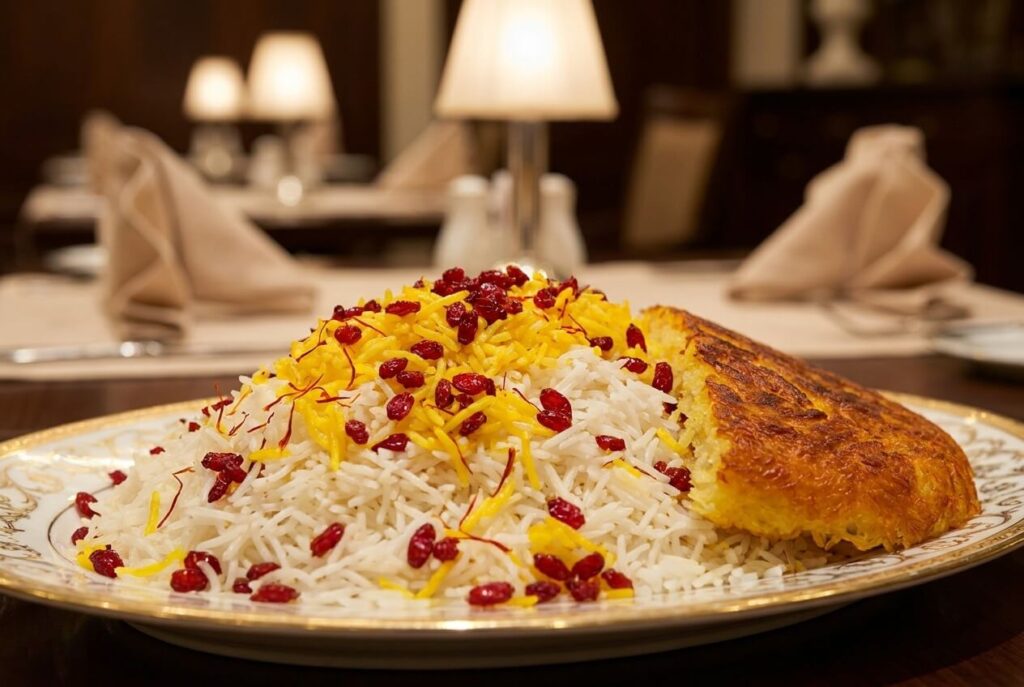
Rice is where the two cuisines part most clearly. In Persian cooking, Persian rice is the star. Cooks steam long-grain basmati until fluffy, then layer it with saffron, barberries, dill or a crispy golden crust called tahdig. In Turkish cooking, rice usually plays a supporting role beside the grill, often alongside bulgur. So if you love aromatic, colourful rice, the Persian side will delight you.
Spices and flavours
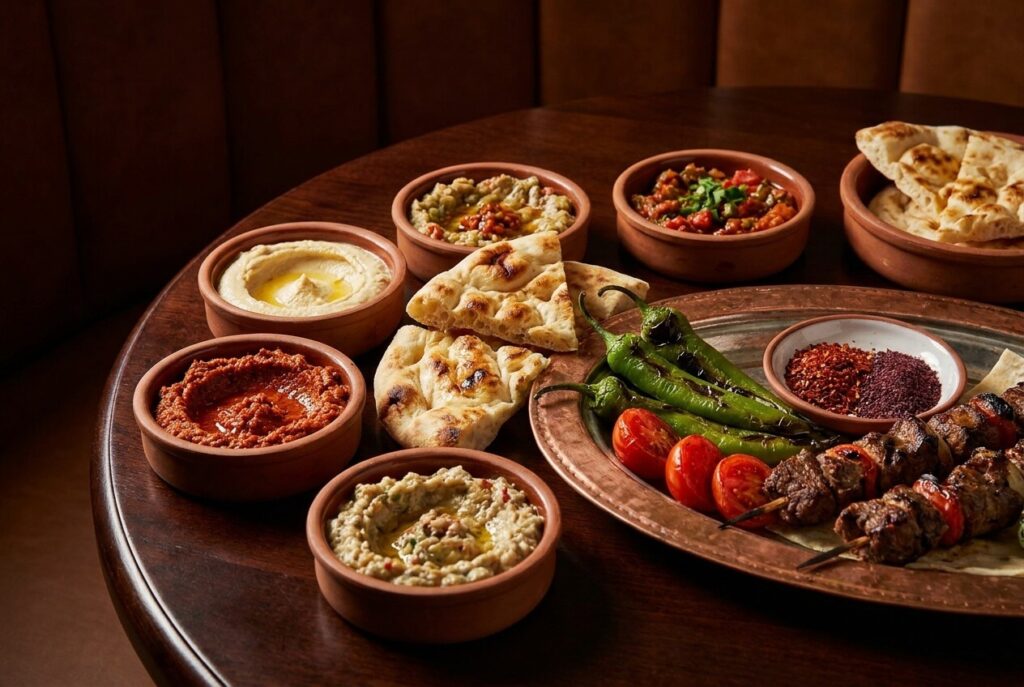
The spice cabinets differ too. Turkish cooks reach for red pepper, cumin, sumac and plenty of char from the charcoal. Persian cooks prefer saffron, dried lime, cinnamon and fresh herbs, which create a fragrant rather than fiery taste. In short, Turkish food often brings warmth and smoke, while Persian food brings perfume and gentle sourness.
Bread, mezze and starters
Both cuisines open the meal with something to share. Turkish tables feature warm flatbread, olive-oil dishes and mezze such as hummus and muhammara. Persian tables offer fresh herbs, feta, and breads like sangak and barbari. Either way, you start with colour, freshness and plenty to pass around.
Turkish vs Persian cuisine: which should you try?
Honestly, you do not have to choose. If you crave smoky, spiced grills and hearty mezze, start with the Turkish dishes. If you prefer fragrant rice, saffron and delicate stews, lean Persian. Better still, order from both and enjoy the best of each in one meal. That, really, is the joy of Turkish vs Persian cuisine.
Taste both at Lalezar in Kuala Lumpur
At Lalezar, you can explore both traditions at one table. We are a halal Turkish, Mediterranean and Persian restaurant in Kuala Lumpur, so our menu spans Adana and testi kebabs alongside koobideh, barg and saffron rice. Explore the full Lalezar menu, or find your nearest branch. We welcome you across three locations: Ampang, USJ Heights and Centrepoint Bandar Utama.
Frequently asked questions
What is the difference between Turkish vs Persian cuisine?
In short, Turkish food leans smoky, grilled and bold, while Persian food leans fragrant, herb-forward and rice-focused. Both share kebabs and flatbread, but their spices and rice set them apart.
Is Persian food spicier than Turkish food?
Usually the opposite. Persian food is aromatic rather than hot, while some Turkish dishes, like Adana kebab, carry a gentle chilli heat.
Are Turkish and Persian dishes halal?
They can be, and it depends on the kitchen. At Lalezar, we prepare every dish halal.