
What is kabsa? It is a fragrant Arabian rice dish of spiced rice cooked together with tender meat. Cooks simmer long-grain basmati with a warm blend of spices, tomato and dried lime, then fold in chicken or lamb. As a result, the rice takes on a rich, golden colour and a deep aroma. Many people call it the national dish of Saudi Arabia. Naturally, it now appears on tables across the whole Arabian Peninsula.
In this guide, we explain where the dish comes from and what goes into it. We also compare it with mandi and biryani. Finally, we show you where to try it halal in Kuala Lumpur.
The origin of kabsa
Kabsa comes from the Arabian Peninsula, above all Saudi Arabia. From there, it spread across the Gulf and the wider Middle East. In fact, most Gulf families have their own version. Today, cooks prepare it for everyday meals and grand celebrations alike. Still, its heart remains firmly Arabian.
What is kabsa made of?
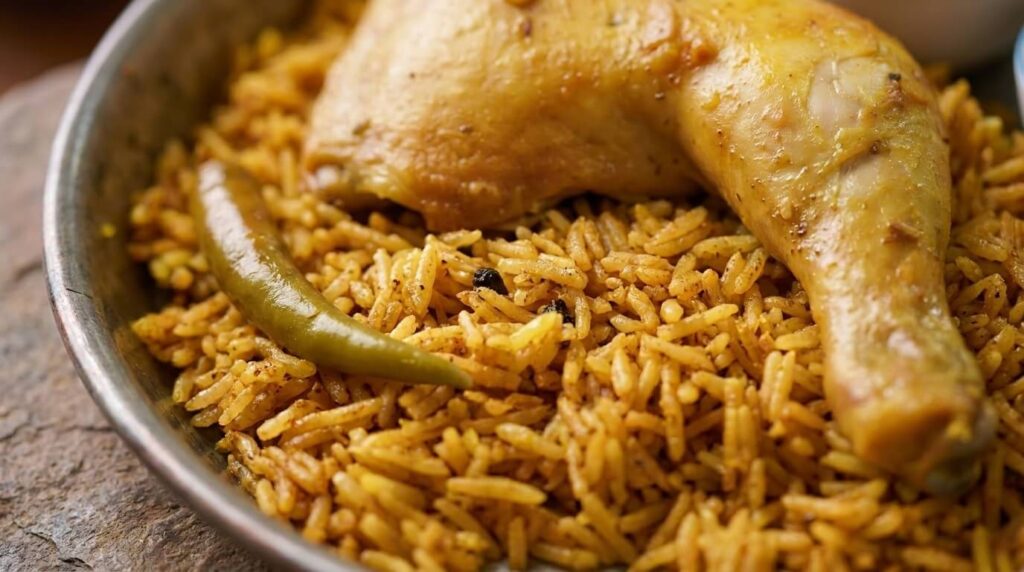
So what goes into kabsa? It brings together a few aromatic ingredients:
- Rice: long-grain basmati, the fragrant base.
- Meat: tender chicken, lamb or lamb shank.
- Tomato: which gives the rice its warm, golden-red colour.
- Spices: dried lime, cardamom, cloves, cinnamon, black pepper and saffron.
Together, these simple parts create a rich, aromatic flavour. Above all, the dried lime gives the dish its signature tang.
How it is cooked
Cooks prepare the dish in one pot, and that method matters. First, they brown the meat with onion, garlic and tomato. Then they add the spices and water to build a fragrant broth. Next, they stir in the rice and let it absorb every drop. As a result, the rice and meat share one deep, unified flavour.
What does it taste like?
Kabsa tastes warm, savoury and gently tangy. The spices stay aromatic rather than fiery. Meanwhile, the dried lime and tomato add a subtle, refreshing sharpness. Because the rice cooks in the meat broth, every grain carries flavour. So it suits anyone who loves fragrant, comforting rice.
Kabsa vs mandi: what’s the difference?
People often confuse kabsa with mandi, yet they differ clearly. Cooks make it in one pot, with tomato and dried lime for a tangy depth. Mandi, by contrast, uses no tomato and cooks the meat separately with a smoky finish. Therefore, kabsa tastes tangier while mandi tastes smokier. If you want to compare, read our guide to mandi rice too.
Chicken, lamb or lamb shank at Lalezar
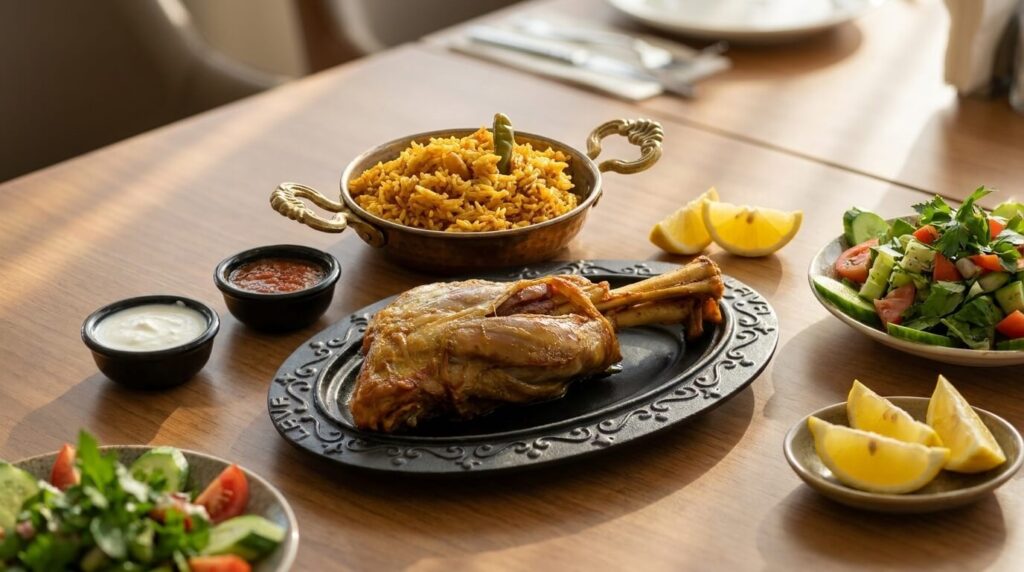
At Lalezar, you can enjoy this dish three ways. Our Chicken with Kabsa Rice brings tender, juicy chicken. Our Lamb Kabsa offers rich, slow-cooked lamb. Meanwhile, our Lamb Shank with Kabsa Rice adds a generous, fall-apart shank. So everyone at the table finds a favourite.
Is kabsa halal?
Can kabsa be halal? Absolutely, because it depends on the meat and the kitchen. At a halal restaurant, the team sources and prepares the chicken or lamb to halal standards. Of course, Muslim diners can then order with full confidence. At Lalezar, we prepare every dish halal.
Where to try kabsa in Kuala Lumpur
Has this made you hungry? Then come and taste our fragrant rice dishes at Lalezar, a halal Turkish, Mediterranean and Persian restaurant in Kuala Lumpur. Alongside kabsa, you will also find mandi, koobideh, kebabs and stews. So explore the full Lalezar menu, or find your nearest branch. We welcome you across three locations: Ampang, USJ Heights and Centrepoint Bandar Utama.
Frequently asked questions
What is kabsa in simple terms?
Simply put, it is spiced Arabian rice cooked in one pot with tender chicken or lamb, tomato and dried lime.
How is it different from biryani?
Biryani layers and steams the rice with the meat, while this Arabian dish simmers everything together with dried lime and tomato for a tangier taste.
Is it spicy?
No. It tastes mild and aromatic rather than hot, with warm spices and a gentle citrus tang.